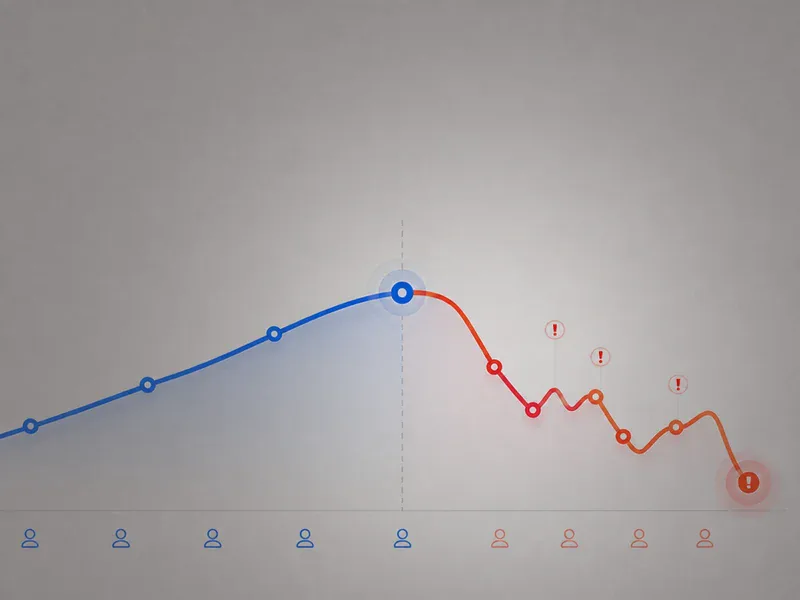
Your systems passed every test in staging. The load testing report looked clean. The team signed off. Then Black Friday arrived, and so did the outage.
If this story sounds familiar, you are not alone. And if it has not happened to you yet, the question is not whether it will. It is whether you will find out in a controlled test environment or in front of your customers.
This is the hidden cost of “good enough” load testing: it does not show up on any budget line until it is too late.
What is load testing? Load testing simulates realistic user traffic on a software system to measure its performance, stability, and scalability under expected and peak conditions. Its purpose is to prove, before release, that the system will hold when real users arrive, at real scale, from real locations.
The Problem: Testing That Passes Is Not the Same as Testing That Proves
Most enterprises run some form of load testing. The issue is not the absence of testing. It is the illusion of confidence that testing creates.
Traditional load testing approaches share a common blind spot: they depend on hand-built scripts, simulate traffic from a single location with a limited number of concurrent users, and run in an environment that looks nothing like production. The result is a green report that measures a system you do not actually run, under conditions your users never create.
Three failure patterns repeat across industries:
The launch-day gap. A financial services product passes internal load tests at 500 concurrent users. On launch day, thousands of users hit the system simultaneously from multiple countries. Response times spike, transactions time out, and the support queue fills within minutes.
**The stale result.**A retailer completes its annual peak-season load test in June. By November, the infrastructure has changed across three releases. The test results are months out of date, and no one re-runs the test.
The lab-conditions trap. A telecom API gateway handles simulated load perfectly in a test environment with warm caches and no background jobs. In production, cold-start latency and concurrent background processes push response times past acceptable thresholds the moment a campaign goes live.
None of these organizations skipped load testing. They all had reports that said “pass.” They just were not testing the right thing.
And a newer pressure is making this worse. AI-assisted development has dramatically accelerated how fast teams ship software. Release velocity keeps climbing while performance validation remains manual, script-bound, and periodic. The gap between what is deployed and what is proven widens with every sprint.
The Business Impact: What C-Level Leaders Are Actually Paying For
Performance failures are rarely framed as what they truly are: a revenue event, a compliance risk, and a competitive signal, all at once.
Revenue loss is immediate and measurable. Akamai’s research on online retail performance found that a 100-millisecond delay in load time can reduce conversion rates**by 7%.**For an enterprise processing millions in daily transactions, a two-hour outage during peak traffic is not a technical incident. It is a material financial event that belongs in the board report.
The Root Cause: Six Gaps in “Good Enough” Load Testing
Understanding why traditional approaches fail is the first step to fixing them. Most enterprise load testing programs share six structural gaps:
1. Script-Heavy, Engineer-Dependent Modeling
Every test scenario is hand-coded, so coverage depends on scarce performance engineering time. Scenarios take days to build, fall behind the product with every release, and rarely reflect how users actually behave. The bottleneck is not load generation. It is scenario creation.
2. Single-Geography Simulation
Real users come from everywhere. A load test run from one data center cannot reveal latency issues, CDN edge failures, or regional infrastructure weaknesses. Global traffic patterns require global load generation.
3. Unrealistic Concurrency Ceilings
Testing at 500 users when your worst-case scenario is 50,000 is not load testing. It is a sanity check. The gap between simulated and real peak concurrency is where most production failures live.
4. Stale Test Environments and Stale Results
Load tests run against staging environments that diverge from production with every release. Without continuous performance validation embedded in the delivery pipeline, test results have a shelf life measured in days, not months.
5. Compliance-Blind Test Design
In regulated industries, using production-representative data and realistic scale in testing raises GDPR, KVKK, and sector-specific concerns. Organizations often water down their test scenarios to sidestep these issues, which means the test no longer reflects reality anyway. The compliance question and the realism question must be solved together, not traded against each other.
6. No Closed-Loop Validation
A load test that produces a report is not the same as a load test that feeds back into capacity planning, release decisions, and infrastructure optimization. Without a closed loop, load testing is a one-time exercise, not an engineering discipline.
The firefighting cost is invisible until it is not. When a production performance crisis hits, engineering teams drop everything. Sprints are derailed. On-call engineers work through the night. Post-mortems take weeks. This cost never appears in the load testing budget, yet it dwarfs it.
Regulatory exposure is growing. In regulated industries such as banking, insurance, and financial services, performance is no longer just a user experience metric. DORA (the EU Digital Operational Resilience Act, in force since January 2025), PSD2, and sector-specific SLA obligations mean that documented proof of system resilience is a compliance requirement. A deployment that causes service degradation can trigger regulatory scrutiny. “We tested it” is not a sufficient answer when the test did not reflect real operating conditions.
Reputation damage compounds over time. Enterprise customers and consumers alike remember outages. In competitive markets, a high-profile performance failure is a gift to your nearest competitor. Customer trust, once lost to a reliability incident, takes quarters to rebuild, not sprints.
Where AI Changes the Equation
AI does not change what load testing must prove. It changes how fast and how realistically teams can prove it.
The largest structural gap in most programs is the first one: scenario modeling. This is exactly where AI assistance delivers the most value. AI-assisted scenario modeling turns real user behavior into executable test scenarios with minimal scripting. Instead of hand-coding every flow, teams model scenarios visually, let AI assistance accelerate scenario creation, and keep scenarios current as the product evolves. Coverage stops depending on how many script-hours the team can spare.
The result is a different operating rhythm: performance validation that keeps pace with AI-accelerated release velocity instead of trailing three releases behind it.
One principle matters here. The goal is not to remove engineers from performance testing. AI assistance accelerates scenario modeling and broadens coverage, while engineers keep every decision that matters: thresholds, release readiness, capacity trade-offs, and risk acceptance. Performance engineering judgment stays where it belongs, with your team.
This direction is grounded in research as well as product engineering. Virgosol’s team has published peer-reviewed work in the field, including a load test volumetrics framework (IEEE UBMK 2025) and hybrid gRPC/REST performance testing for banking systems (UBAK 2024).
The Solution: What Enterprise-Grade, AI-Assisted Load Testing Looks Like
Loadmance is Virgosol’s cloud-based performance engineering solution for high-concurrency, globally distributed load simulation with AI-assisted scenario modeling. It addresses each of the six structural gaps directly:
AI-assisted modeling with minimal scripting. Visual scenario design and AI-assisted modeling turn real user behavior into executable scenarios without heavy script maintenance. In enterprise use, this translates into 60 to 75% faster test preparation and execution.
Global load generation at scale. Loadmance simulates real-world traffic through distributed cloud load generation across multiple geographic regions simultaneously, revealing the performance characteristics that single-location tests consistently miss. Enterprise systems face global users. Their load tests should too.
**Realistic peak concurrency.**The solution handles the concurrency levels that enterprise systems actually face: not comfortable simulations, but stress conditions that match your worst-case scenarios before they become your next incident.
Continuous performance engineering. Rather than treating load testing as a milestone activity, Loadmance integrates into the CI/CD pipeline and supports structured pre-campaign and pre-release validation cycles, making performance a continuous signal rather than a periodic gate.
**Business visibility, not just technical metrics.**Real-time telemetry, SLA tracking, and executive dashboards connect engineering results to business risk, closing the loop between test output, capacity planning, and release decisions.
**Built for high-stakes, regulated environments.**Loadmance is designed for the environments where performance failure is most expensive: banking and finance, telecom, retail and e-commerce, and high-growth digital businesses, including cases where SLA compliance is a regulatory and contractual requirement. Across enterprise deployments, this approach delivers up to 70% fewer production incidents and reduced emergency scaling costs.
Four Test Types, Four Business Questions
Most load testing tools answer one question. Loadmance answers four:
| Test Type | The Business Question It Answers |
|---|---|
| Load Testing | Does the system perform within acceptable thresholds at expected peak traffic? |
| Stress Testing | Where does the system break, and how does it fail when pushed beyond its limits? |
| Peak Testing | Is the system ready for the highest-concurrency moment of the year? |
| Resilience Testing | Does the system recover gracefully when components degrade or fail under load? |
These are not variations of the same test. Each surfaces a different category of risk. Running only load tests, the most common practice, leaves stress failure modes, peak capacity gaps, and recovery behavior entirely unvalidated.
Protocol and Workload Coverage
Enterprise systems are not just web applications. Loadmance supports the full range of modern protocol workloads: HTTP, gRPC, WebSocket, WebRTC, VoIP, and MQTT for IoT messaging. Teams can test API gateways, real-time communication systems, streaming pipelines, and connected device infrastructure under realistic load, without needing separate tools for each protocol.
For organizations running media delivery or live streaming infrastructure, Loadmance supports H.264 codec scenarios, enabling performance validation of video pipelines before they face real audience traffic.
User Experience Metrics, Not Just Infrastructure Metrics
Loadmance surfaces the Apdex score, the industry-standard measure of user satisfaction under load, alongside traditional performance metrics. Where throughput and response time tell you how the system is behaving, Apdex tells you how users are experiencing it. A system can pass infrastructure thresholds and still deliver a degraded user experience. Apdex closes that gap.
This approach has earned external recognition. Loadmance AI won a Silver Stevie Award for New Product of the Year in Financial Technology at the 2025 Stevie Awards for Technology Excellence, and a Loadmance-based project delivered with Anadolu Sigorta won Best Test Automation Project (Non-Functional) at the 2025 European Software Testing Awards.
The Decision Framework: Three Questions Every CTO Should Be Able to Answer
Before your next major release, campaign launch, or peak traffic period, three questions should have verifiable answers, not assumptions:
Can you prove your system handles real peak concurrency, not simulated approximations? If the answer relies on a staging environment test from three releases ago, you do not have an answer. You have a hope.
Are your test results as current as your codebase, and do they meet your compliance obligations? In regulated industries, documented proof of resilience under realistic conditions is now a regulatory expectation under frameworks like DORA. If your tests avoid realistic data volumes and scale in order to sidestep compliance concerns, your performance assurance program is a liability, not an asset.
What is the cost of your next outage, and how does it compare to the cost of preventing it? This is ultimately a financial calculation. The cost of enterprise-grade load testing is predictable. The cost of a production performance failure, in revenue, regulatory exposure, engineering disruption, and customer trust, is not. The asymmetry is significant.
Organizations that treat load testing as a development-team checkbox are making an implicit bet that their current approach is good enough. The hidden cost of that bet is only visible in hindsight.
Frequently Asked Questions
What is load testing and why does it matter for enterprise systems?
Load testing is the practice of simulating realistic user traffic on a software system to measure its performance, stability, and scalability under expected and peak operating conditions. For enterprise systems, it matters because the cost of performance failures, measured in lost revenue, regulatory exposure, and customer churn, typically far exceeds the cost of the testing itself. Enterprise systems face concurrent global traffic, complex integration dependencies, and strict SLA obligations that make performance validation a business-critical discipline, not a development-phase task.
What is the difference between load testing and stress testing?
Load testing validates system behavior under expected peak conditions. It answers the question “does this system perform within acceptable thresholds when traffic is at its maximum normal level?” Stress testing pushes beyond expected limits to find the breaking point. It answers “where does this system fail, and how does it fail?” Both are necessary. Load testing gives you confidence for planned peak periods. Stress testing reveals failure modes before users do.
What is AI-assisted load testing?
AI-assisted load testing uses AI to accelerate the creation and maintenance of test scenarios, typically by modeling real user behavior into executable scenarios with minimal scripting. It addresses the biggest bottleneck in traditional load testing: hand-coded, engineer-dependent scenario creation that cannot keep pace with release velocity. The validation logic, thresholds, and release decisions remain with the engineering team.
Does AI replace performance engineers?
No. AI assistance accelerates scenario modeling, expands coverage, and reduces the scripting burden, but performance engineering judgment does not transfer to the tool. Engineers define acceptance thresholds, interpret results in business context, decide release readiness, and own capacity trade-offs. The practical effect of AI assistance is that senior engineers spend their time on those decisions instead of on script maintenance.
How often should enterprises run load tests?
At minimum, before every major release, every significant infrastructure change, and every anticipated peak traffic period such as campaigns, product launches, and seasonal peaks. Best practice in continuous delivery environments is to integrate performance validation into the CI/CD pipeline so that every release is tested against a defined performance baseline, making load testing continuous rather than periodic. Stale results from a previous release cycle do not accurately reflect the system you are actually deploying.
What happens if you skip performance testing before a product launch?
The consequences depend on traffic volume and system architecture, but the pattern is consistent: systems that behave acceptably in low-traffic conditions frequently exhibit non-linear degradation under real concurrent load. Response times that are acceptable at 100 users may become unacceptable at 10,000. Database connection pools exhaust. Third-party API rate limits are hit. Memory pressure causes cascading failures. The cost of discovering these issues in production, in customer impact, engineering response time, and reputational damage, is substantially higher than discovering them in a controlled test before launch.
How does Loadmance differ from open-source load testing tools like JMeter or k6?
Open-source tools like JMeter and k6 are powerful scripting frameworks for engineers who want to build and run load tests themselves. They require infrastructure provisioning, script development, and operational expertise to run at enterprise scale. Loadmance is an enterprise performance engineering solution purpose-built for globally distributed, high-concurrency load simulation, with visual and AI-assisted scenario modeling that minimizes scripting, four test types (Load, Stress, Peak, Resilience), broad protocol coverage including gRPC, WebSocket, WebRTC, VoIP, and MQTT, and SLA and Apdex reporting that connects results to business risk. The distinction matters most at scale: proving tens of thousands of concurrent users across multiple geographies is a different engineering problem than running a local load test script.
What metrics should executives track to evaluate performance testing maturity?
Three categories matter most for executive visibility: capacity metrics (what concurrency level has been proven in testing versus expected peak), velocity metrics (how frequently performance tests run and how current the results are relative to the deploeployed codebase), and incident metrics (the percentage of production performance incidents that were preceded by a passing load test). Organizations with mature performance engineering programs can answer all three categories with current data. Organizations with “good enough” programs typically cannot.
The Bottom Line
“Good enough” load testing is a risk management strategy disguised as a quality process. It creates the appearance of assurance while leaving structural gaps that production traffic reliably finds.
The organizations that avoid costly performance failures do not necessarily spend more on testing. They test differently: at the right scale, with realistic traffic patterns, with AI-assisted modeling that keeps scenarios current, integrated into the delivery process, and aligned with their regulatory obligations.
The hidden cost only stays hidden until the next outage.
See how your system holds under real peak load. Book a demo or talk to an expert:[email protected]