
Every card payment is a complex process completed in seconds, yet dependent on dozens of systems working flawlessly behind the scenes. When a customer taps their card, the terminal, the bank, the payment network, and the merchant software all communicate with one another. A failure in any single link of this chain can mean a failed transaction, a double charge, or a security vulnerability. This is exactly why POS terminal testing is one of the invisible yet most critical quality safeguards in the payments world.
What Is POS Terminal Testing?
POS terminal testing is the full set of controlled test activities carried out to verify that card-accepting devices (fixed POS, mobile POS, ECR-integrated POS, and virtual POS) and the software managing them operate correctly, securely, and without interruption.
This testing process looks at far more than just "did the transaction go through or not." Several dimensions are evaluated together:
- The transaction is reflected with the correct amount, to the correct card, and to the correct account
- Approval, decline, cancellation, and refund scenarios resolve as expected
- Card data is securely encrypted and never stored
- Terminal software works in harmony with different card types and banks
- The system behaves correctly under adverse conditions such as network outages and timeouts
In short, POS terminal testing systematically seeks the answer to one question: "Does the payment work correctly under every condition?"
Why Is Software Quality So Critical in Payment Systems?
A visual glitch on an e-commerce site may annoy a user, but it doesn't cause financial loss. In a payment system, however, even the smallest error directly affects money, customer trust, and legal obligations.
The main reasons software quality is critical in payment systems are:
- **Financial risk:**Incorrect charges, double charges, or failed refunds create direct monetary loss.
- **Security and compliance:**The payments industry is subject to strict standards such as PCI DSS. A system that fails to protect card data faces both legal penalties and reputational damage.
- **Customer trust:**A failed transaction at checkout instantly damages a customer's trust in the brand. Trust is the hardest value to win back in the payment experience.
- **Continuity:**POS systems run 24/7. An outage during peak hours means direct revenue loss for the merchant.
For this reason, "appearing to work" is not enough in payment software — it must work correctly in a proven way across every scenario.
EMV Card Reader Testing and Core Test Coverage
At the heart of modern POS terminals lies the EMV (Europay, Mastercard, Visa) standard. This standard, which secures chip cards, offers far stronger protection than the magnetic stripe. That's why EMV card reader testing is an indispensable part of the POS testing process.
In EMV and general POS testing, the following areas are typically verified:
- **Card reading methods:**Correct operation of chip (contact), contactless (NFC), and magnetic stripe reads.
- **Transaction types:**Sale, cancellation, refund, pre-authorization, and installment transactions.
- **Authentication:**PIN entry, signature, and limit control in contactless transactions.
- **Messaging protocols:**Correct construction and interpretation of message structures such as ISO 8583 between the terminal and the bank.
- **Receipts and reporting:**Consistency of the receipt generated after the transaction and of end-of-day reports.
The breadth of this coverage is the fundamental reason manual testing alone falls short. When you consider every bank, every card type, and every scenario combination, the number of tests quickly reaches the thousands.
How Often Should POS Terminals Be Tested?
This is one of the most frequently asked questions: can POS systems be tested once and left alone? The answer is a definite no.
POS software is part of a constantly changing ecosystem. Banks update their protocols, new card types are added, regulations change, and device manufacturers release new firmware versions. Testing is therefore not a one-time task but a continuous cycle.
A practical approach to test frequency might look like this:
- **With every software update:**Regression testing must always be performed before a new version is released.
- **On bank/protocol changes:**The relevant bank integration must be re-validated.
- **Periodically:**Even when nothing has changed, critical scenarios should be checked at regular intervals (for example, through weekly or daily automated runs).
- **Before peak periods:**Load and resilience tests should be performed ahead of high-volume periods such as holidays and sales seasons.
Regular, automated testing ensures issues are caught before they ever reach the customer.
Which Scenarios Are Critical in POS Software Testing?
Not all scenarios carry equal weight. Some cases touch money and security directly and must therefore be tested as a priority. The most critical scenarios in POS software testing include:
- **Happy path transactions:**The most common successful sale flow must always work.
- **Negative scenarios:**In cases such as insufficient balance, invalid card, expired card, or wrong PIN, the system must return the correct error message.
- **Interruptions and timeouts:**If the network connection drops mid-transaction, money must not be charged while the transaction is left incomplete. This is where the risk of double charges is highest.
- **Cancellation and refund flows:**Reversing an erroneous transaction must be as reliable as the sale itself.
- **Concurrency:**The system must stay consistent when many transactions arrive at the same time.
- **Security scenarios:**Card data must not be written to logs, encryption rules must be followed, and unauthorized access must be prevented.
When you consider the combinations of these scenarios, comprehensive testing only becomes sustainable through automation.
Is Testing Possible with Physical Device Simulation?
This is one of the most commonly asked topics in POS testing. The answer: yes — it is both possible and, in most cases, the preferred method.
Tapping a real card on a physical terminal for every test scenario is slow, costly, and hard to scale. Modern testing approaches use simulation and emulation instead:
- Terminal simulatorsreplicate the behavior of a real POS device in software, allowing hundreds of scenarios to run in seconds.
- Card and bank simulatorscan generate different card types and bank responses (approval, decline, timeout, etc.) without using a real card.
- Hybrid approachesuse real devices for critical scenarios while relying on simulation for routine regression testing.
Through simulation, edge cases that are difficult to test in the real world can be tried safely and repeatably. Even so, simulation does not fully replace the final end-to-end test performed before going live; the two complement each other.
POS Test Automation with Roboclick
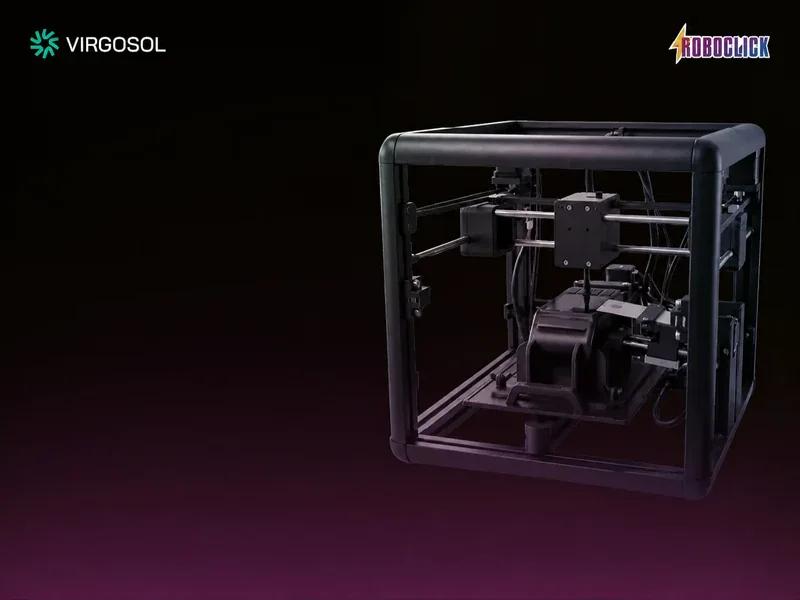
Roboclick is an innovative testing platform that fully automates the physical test processes of POS and SoftPOS devices end-to-end, bringing together robotic control, image processing (OCR), and AI-powered analysis. By precisely simulating real user behavior, it performs key presses, card reads (chip and contactless), and screen validation without the need for human intervention.
With Roboclick:
- **Fast regression:**Hundreds of scenarios can be re-run within minutes after every update.
- **Repeatability:**The same test runs under the same conditions every time, making results reliable.
- **Scenario coverage:**Positive, negative, and edge cases are all covered systematically.
- **Reporting:**At the end of each run, it's clear which scenario passed and which failed.
- **Device and simulation support:**Flexible scenarios where real devices and simulation can be used together.
Automation frees the team from repetitive work, letting them spend their time on designing new scenarios and on analysis.
How Is Software Quality Ensured in Payment Systems?
Bringing all these topics together, a few core principles stand out for safeguarding quality in payment systems:
- **Spread testing across the process.**Don't treat quality as a single pre-production step; test at every stage of development.
- **Invest in automation.**Automate critical and repetitive scenarios to gain both speed and reliability.
- **Don't neglect negative scenarios.**The real risk emerges in unexpected situations.
- **Use simulation and real devices together.**Cover breadth with simulation and final validation with real devices.
- **Design security from the start.**Compliance with standards such as PCI DSS should be a requirement built in from the beginning, not added later.
- **Monitor continuously.**Keep monitoring systems in production to catch issues early.
When applied together, these principles make the payment experience secure and uninterrupted — for both the business and the customer.
Frequently Asked Questions (FAQ)
**How often should POS terminals be tested?**Testing should be performed with every software update, on bank or protocol changes, and before peak periods. In addition, even when nothing has changed, critical scenarios should be checked through regular automated runs.
**Which scenarios are critical in POS software testing?**Beyond the successful sale flow, the most critical test areas are negative scenarios such as insufficient balance and invalid cards, network interruptions during transactions, cancellation and refund flows, concurrent transactions, and security scenarios related to protecting card data.
**Is testing possible with physical device simulation?**Yes. Thanks to terminal, card, and bank simulators, many scenarios can be tested quickly and repeatably without a real device. Still, it's recommended to validate critical scenarios with a real device before going live; simulation and real-device testing complement each other.
**Why is EMV card reader testing important?**EMV is the standard that secures chip cards. Because the correct operation of this reader is critical for both transaction security and compatibility with different cards and banks, it is treated as a separate testing topic.